





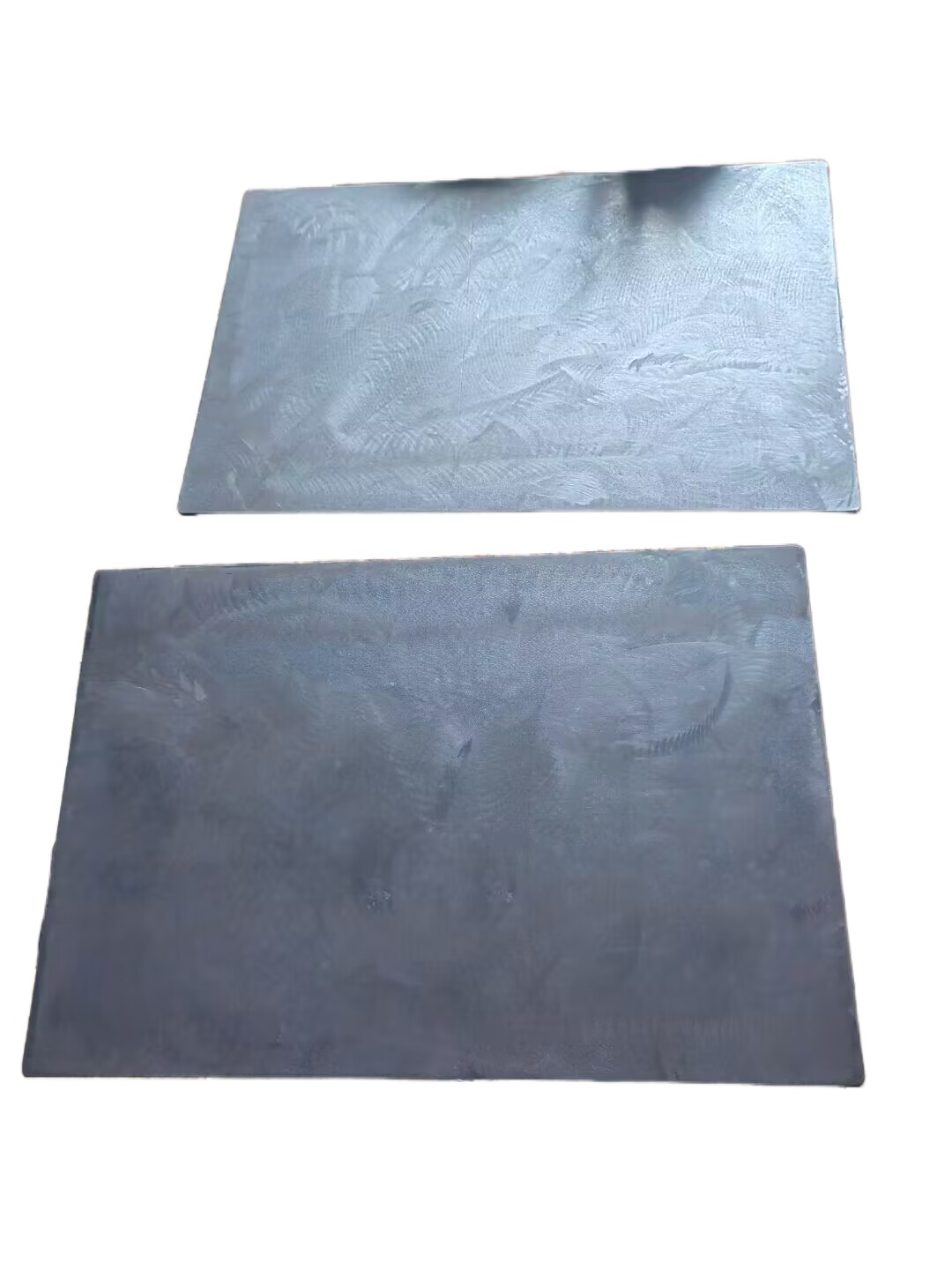

1.High refractoriness.
2.Good thermal conductivity.
3.Small expansion coefficient.
4.High strength.
5.Ultra thin,energy saving.
Inquiry
|
Silicon Carbide (SiC) wear-resistant plates are high-performance materials widely used in industrial fields that require high wear resistance, corrosion resistance, and high-temperature stability. Below is key information about silicon carbide wear-resistant plates:
1. Material Properties
-
High Hardness: Silicon carbide has a hardness second only to diamond, offering excellent wear resistance.
-
Corrosion Resistance: It exhibits strong resistance to chemicals such as acids and alkalis.
-
High-Temperature Stability: It maintains excellent mechanical properties even in high-temperature environments.
-
Low Thermal Expansion Coefficient: It provides good dimensional stability under temperature variations.
-
High Thermal Conductivity: Suitable for applications requiring heat dissipation.
2. Application Areas
-
Mining and Metallurgy: Used for conveyor liners, wear-resistant pipelines, etc.
-
Chemical Industry: Used for corrosion-resistant equipment linings, reactors, etc.
-
Power Industry: Used for wear-resistant components in flue gas desulfurization equipment.
-
Ceramics and Glass Industry: Used for wear-resistant parts in high-temperature kilns.
-
Mechanical Manufacturing: Used for high-wear-resistant mechanical components.
3. Manufacturing Processes
-
Hot Pressing Sintering: Produces high-density, high-strength silicon carbide plates under high temperature and pressure.
-
Reaction Sintering: Utilizes the reaction between silicon and carbon to form silicon carbide, suitable for manufacturing complex shapes.
-
Chemical Vapor Deposition (CVD): Used to produce high-purity, high-performance silicon carbide materials.
4. Advantages
-
Long Service Life: Offers extended lifespan in harsh environments.
-
Low Maintenance Costs: Reduces replacement and downtime.
-
High Efficiency: Improves production efficiency and reduces energy consumption.
5. Considerations
-
Brittleness: Silicon carbide is relatively brittle and should be protected from strong impacts.
-
Cost: The complex manufacturing process results in higher costs.
-
Processing Difficulty: Its high hardness makes processing challenging, requiring specialized tools.
Silicon carbide wear-resistant plates, with their excellent properties, are widely used in various industrial fields. When selecting, it is important to consider their characteristics and costs based on specific requirements.
Technical parameters
|
Item |
Unit |
Data |
|
Max temperature of application |
℃ |
1380 |
|
Density |
g/cm3 |
≥3.02 |
|
Open porosity |
% |
<0.1 |
|
Bending strength |
Mpa |
250(20℃) |
|
Mpa |
280(1200℃) |
|
|
Modulus of elasticity |
Gpa |
330(20℃) |
|
Gpa |
300(1200℃) |
|
|
Thermal conductivity |
W/m.k |
45(1200℃) |
|
Coefficient of thermal expansion |
K-1×10⁻⁶ |
4.5 |
|
Rigidity |
|
13 |
|
Acid alkaline-proof |
|
Excellent |
Property:
→Superior high temperature resistance,wear resistance and oxidation resistance.
→Excellent straightness,less than 1‰.
→High uniformly distributed loading capacity,more than 4997 kg.m/L.
→OEM accepted.
→Easy to install.
→Various shape accepted,Germany imported technology and materials.
→Longer service life ( about 5 times more than that of alumina ceramic and 6 times more than that of polyurethane).
Packaging & Shipping
The packing type of silicon carbide product is plywood box with plastic foam inside.
Email:masonvicky@hotmail.com skype:masonvicky


